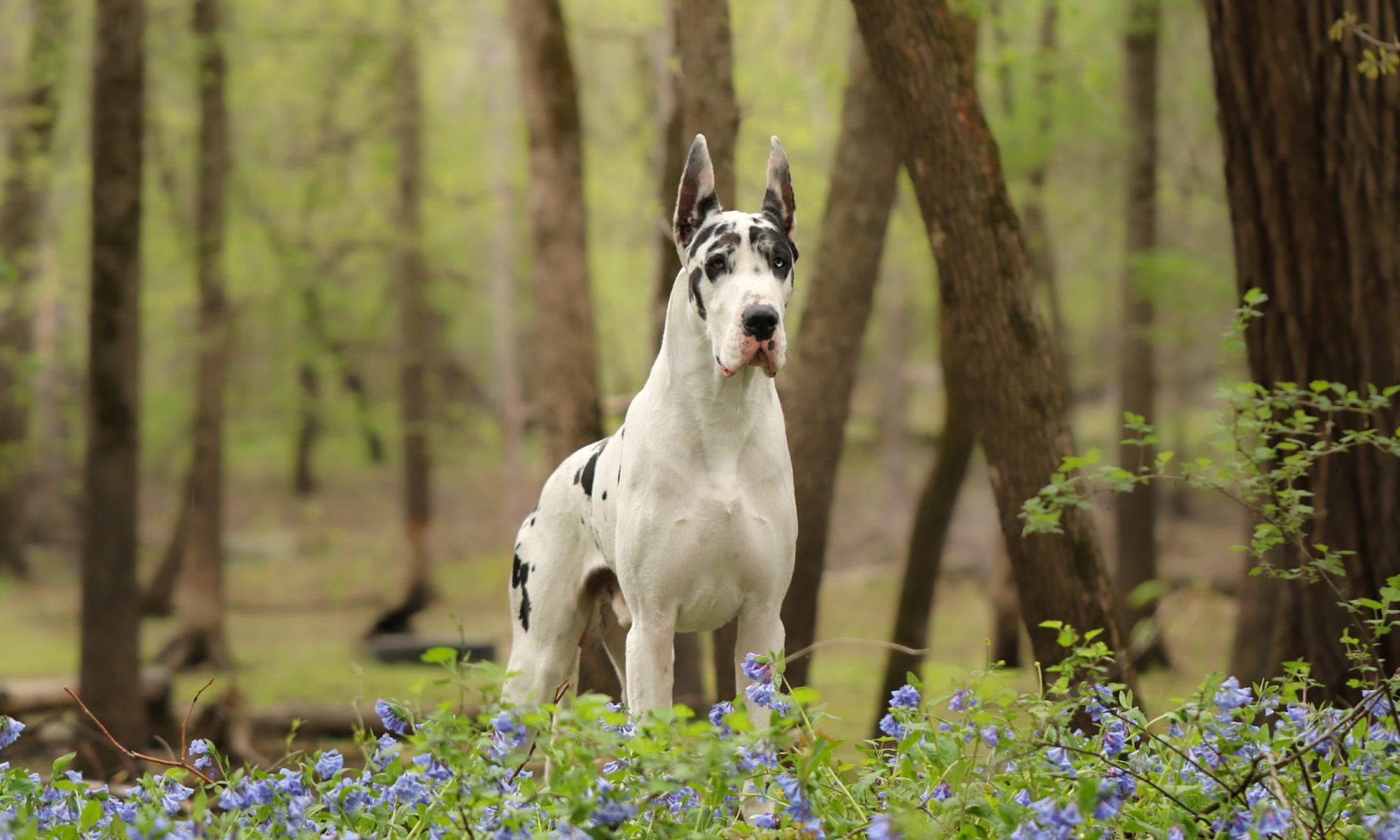
Great Dane owners definitely need to know about bloat.
The first thing that needs to be acknowledged is that there are no definitive agreements on what causes bloat. Unfortunately that means there is no guaranteed way to prevent it. BUT, there are things we can do to hopefully prevent bloat from being fatal.
Do not let the fear of bloat rule your life. Be educated and prepared, but not fearful.
Young dogs rarely bloat (not impossible, just uncommon). The risk increases as the dog ages.
Elevated feeding bowls. Some believe feeding Danes from raised bowls – or not feeding from raised bowls – will cause or prevent bloat. There was a bloat study (Purdue) done a number of years ago that linked raised bowls and bloat, but there is a possibility the link is correlative vs causative (bloat-prone breeds are more apt to be fed from a raised feeder, but it does not mean that it was actually causing bloat). For me, I don’t feed from elevated bowls unless my dog has some sort of physical concern that would necessitate it.
Restricting exercise after eating. Many people believe that restricting exercise around feeding time will prevent bloat. It’s often taken to an extreme, with dogs crated for an extended period of time post meals. I have even seen people add in pre meal exercise restrictions. A proper amount of exercise is important in our dogs’ lives, so there needs to be a logical balance. I personally do not restrict exercise before or after meals.
So what can we do?
Preventative gastropexy. This is the single most effective way of nearly eliminating the risk of losing your dog to bloat. Once your dog is fully mature, in Danes around 18 months old, you can have a prophylactic gastropexy performed (“tack”), which adheres the stomach to the body cavity. Learn more. A gastropexy does not prevent “bloat” (stomach filling with gas), but it should keep the stomach from rotating (torsion), which is the most fatal aspect. Some sources state it prevents GDV by over 95% or reduces the risk of twisting by 92%. You still need to seek emergency treatment if you suspect bloat, but if there is no torsion, there are non-surgical options for treatment. Once torsion occurs, the only option is surgery to right the stomach, remove the necrotic tissue, and perform a gastropexy at that time.
Only use an experienced vet for your gastropexy! Get referrals from your nearest Dane club in the US. Ensure the vet follows the recommended surgery protocols for the breed.
Know what bloat looks like. Know the symptoms of bloat and be prepared to react quickly. Time is of the essence. Educate yourself on the symptoms and signs, so that you can react quickly.
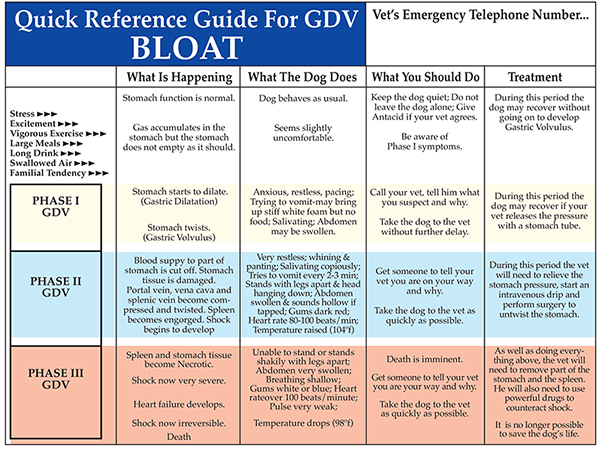
Know your nearest emergency vet. I have two vets’ numbers and addresses in my cell phone. Always call in route as they might need to refer you elsewhere.
Bloat kits. Consider investing in a bloat kit and know how to use it. Nature’s Farmacy has a great kit, although I think they no longer include the concentrated liquid Simethicone. Highly recommend keeping that on hand, even if you do not have the full bloat kit. You can dose that if you suspect bloat.
Creating a non-stressy dog. Raise your puppy to be a confident adult. Fearful/nervous dogs have been linked to being more prone to bloat.
From the moment you bring home your Great Dane puppy, your priority should be molding that puppy into an adaptable adult. Of course, starting with a puppy bred from dogs with appropriate temperament is paramount as well!
Keeping your dog fit and healthy. Keep them active, fit, and healthy. Feed a quality diet. Allow plenty of opportunities for them to run safely off-leash.