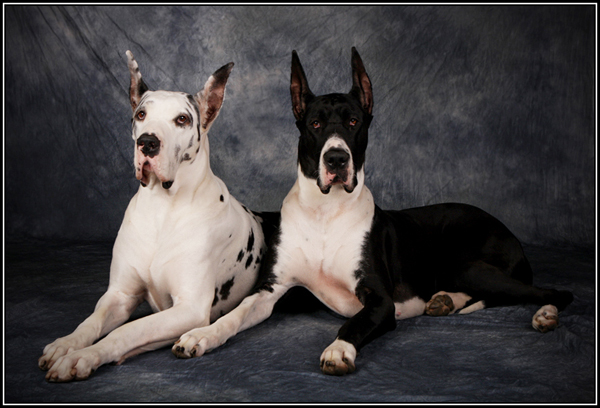
Taxi, the sire we are using, has been deceased for several years, so this will be a surgical artificial insemination, using frozen semen. When doing an AI, the timing is critical in ensuring a successful breeding. Frozen semen does not live as long as fresh, which further sensitizes the timing.
To determine the correct timing, we started Skyy’s progesterone testing last Thursday, February 10th, and have repeated every other day. The goal is to determine when she has her LH (Luteinizing hormone) surge, indicated when the progesterone level goes over 2.0. This happens two days prior to ovulation. The eggs are ready for fertilization 4-6 days after that.
We have the implant scheduled for this coming Saturday. <fingers crossed!>
I used to believe that being a responsible pet owner meant diligent annual vaccinations. I now realize that it is unnecessary and even potentially harmful.
I’ve used a limited vaccine protocol for over 10 years now. I vaccinate for parvo and distemper at 8-9 weeks old, 4 weeks later and then a third, and final, booster at a year old.
Wait until the puppy is at least six months of age before vaccinating for rabies. A rabies booster is then required 12 months later. After that, I vaccinate every three years for rabies (per Iowa law).
Note: Never give a rabies shot at the same time as other boosters – space them out by at least two weeks. Completely avoid 5- or 7-way combo shots (which many vets push). The combo shots are risky for multiple reasons. Read about the risk of combo shots.
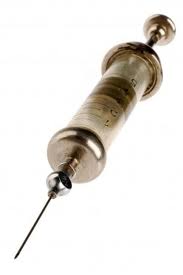
I do not give any other vaccines throughout the life of the dog. Over-vaccination can be detrimental to your dog’s health. Challenge studies have indicated parvo and distemper vaccinations give animals 5-7 years of immunity, possibly longer. So, not only are repeated jabs most likely unnecessary, they also carry a health risk.
I was vaccinating for bordetella (kennel cough) annually, however the last time my dogs received the intra-nasal bordetella vaccine, Skyy suffered a reaction. It turned out to be relatively minor (in hindsight; it did not seem that way when I was making an ER vet trip in the middle of the night), but it has made me nervous. I’m still on the fence about using this in the future.
In lieu of vaccinations, I utilize titers. A titer checks for antibodies present in the blood, which signifies the immune response level. To titer, your vet simply needs to draw a small sample of blood and send it to an appropriate lab, like ANTECH (some vets might handle titers in house). The results come back within a few weeks. In the years that I’ve been titering my dogs, the results have always come back strong, showing an appropriate immune response level.
The lab will dilute the sample of blood to determine the titer levels. The number of times the sample can be diluted before no antibodies can be detected are read as ratio’s. If the sample can be diluted 100 times, still showing antibodies, the resulting ratio would read 1:100. So, the higher the number, the stronger the titer.
My results from ANTECH Diagnostics state, for both parvo and distemper: “A titer of 1:5 or greater, with no clinical signs, indicates immunologic response to vaccination. A titer of less than 1:5 indicates poor immunologic response to vaccination.”
Both of my girls results, for both parvo and distemper, were listed >1:5, showing appropriate immune response levels.
The titers are used for “proof of vaccination”, for when my dogs attend training classes, are boarded, etc. This is actually the primary reason I titer, as there isn’t concern on my end regarding lack of immunity. Just need proof that the lack of vaccinations isn’t done out of neglect and my dogs carry an appropriate immune response level so they are not at risk.
Just had titers ran on my two dogs. It was $57/dog for a set of parvo/distemper titers, so I walked out of the vet’s office paying $114 total. This is more than shots, but this way my dogs are not subjected to something potentially harmful.
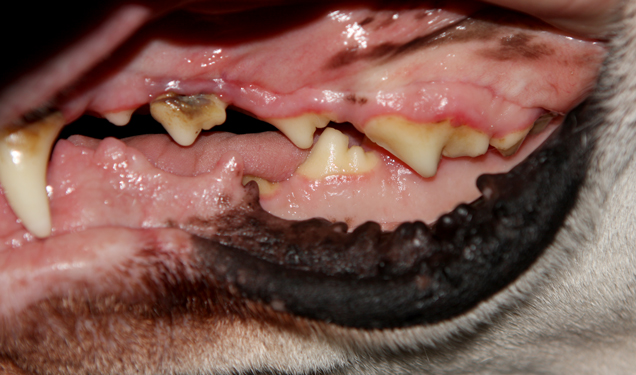
As a raw feeder, I’ve always rested easy about my dogs’ teeth health. The raw meaty bones clean their teeth naturally. Unfortunately, Skyy only chews her bones with her back teeth (she refuses to use her feet or do any ripping of raw meaty bones), which has created some issue with the teeth in the front of her mouth. Her canine teeth have some tartar build up, although they still look good for an almost seven year old dog. However, she has one premolar that has become problematic.
She is going in tomorrow to have the problem tooth extracted. The vet will also clean the canine teeth while she is under.
Going forward, I will be using more recreational (chew) bones, as well as brushing the teeth, in hopes of keeping those front teeth cleaner.
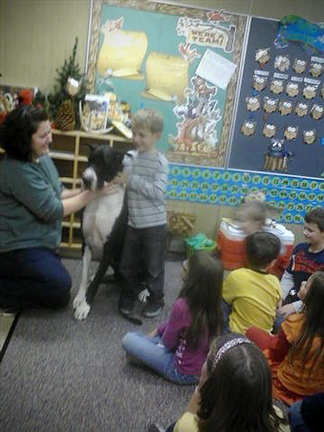
Kizzy had a blast visiting both our boys in their first and third grade classrooms this week. She was swarmed by kids and thoroughly enjoyed the opportunity to pass out as many kisses as possible.
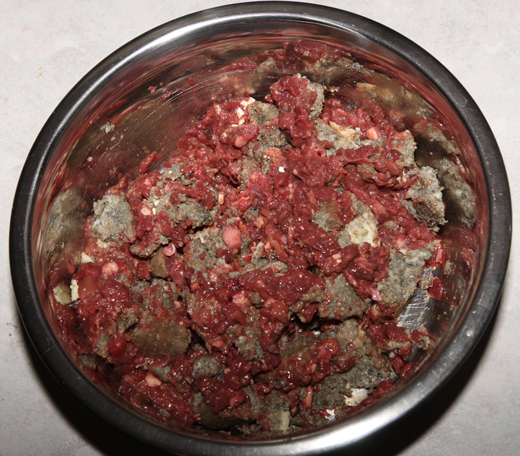
Chicken leg quarters for breakfast. Dinner tonight was a ground beef organ mix from My Pet Carnivore and Tripett. Each dog got one pound of the beef organ mix and one can of tripe. 2000 mg Vit C added to each dog’s bowl.
Ground beef organ mix from My Pet Carnivore & Tripett
Haven’t had any diet posts lately, so figured I would do a “what we fed today” post.
Tonight’s meal:
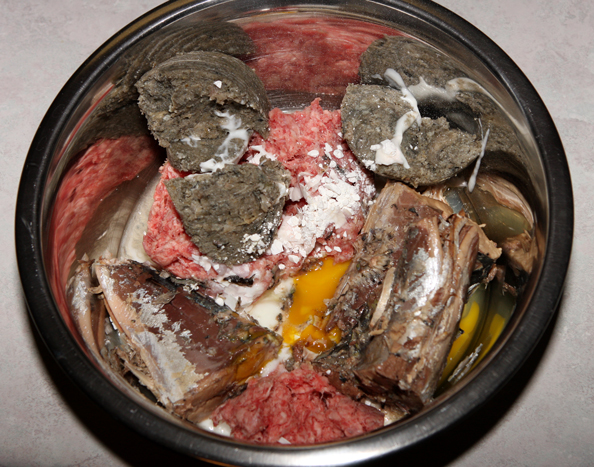
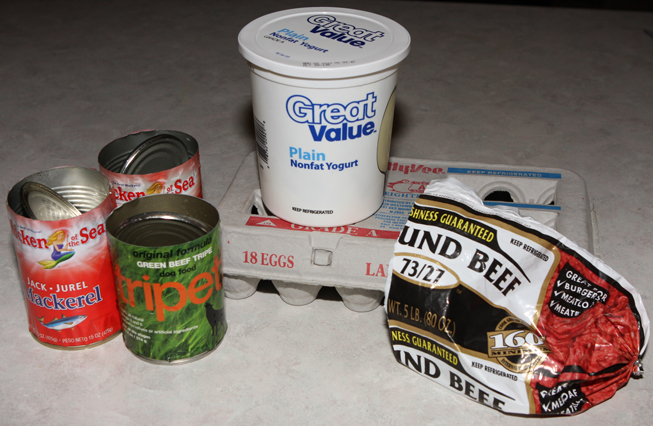
Canned Jack Mackerel, Tripett, egg (shell included), ground beef, yogurt and Vitamin C.
Mmmmmm
Each dog got one can of fish, 1/2 can of tripe, couple of heaping tablespoons of yogurt, about 1/2 lb beef, 1 egg and 2000 mg Vit C.
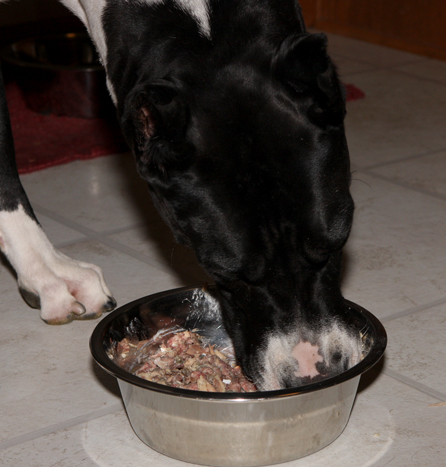
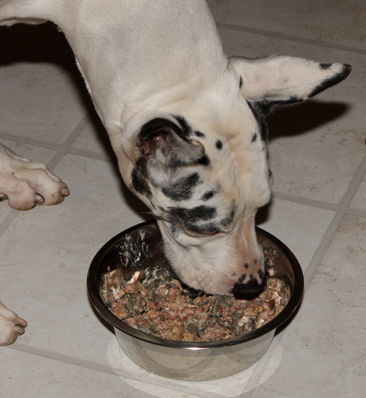
The dogs approve of my stellar culinary skills….
Tomorrow morning’s meal:
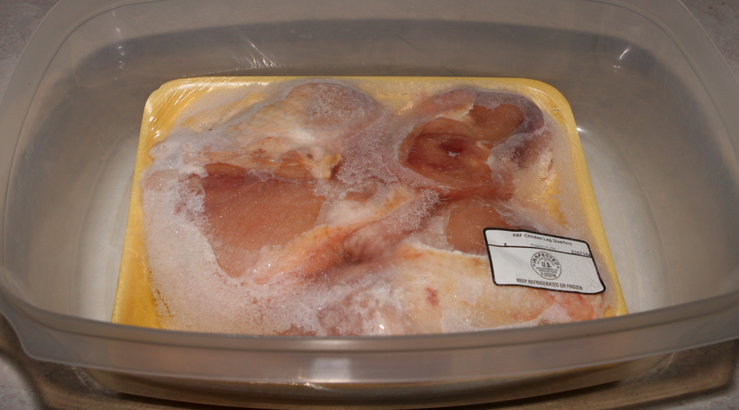
Chicken leg quarters
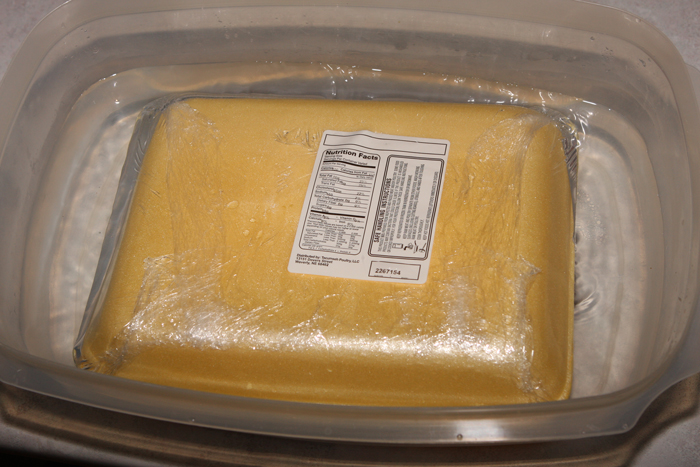
I wait to pull out the next meal until I’m cleaning up the current meal, which doesn’t usually allow the meat enough thaw time. I often end up letting the meat sit in some warm water to speed up the thawing process.